Emergency Trauma Technician
Foundational emergency medical training designed for Alaska’s rural and remote communities.
Emergency care often begins close to home
ETT’s across Alaska
Emergency Trauma Technicians, or ETTs, are often among the first people available to help when a medical emergency occurs in a rural or remote community.
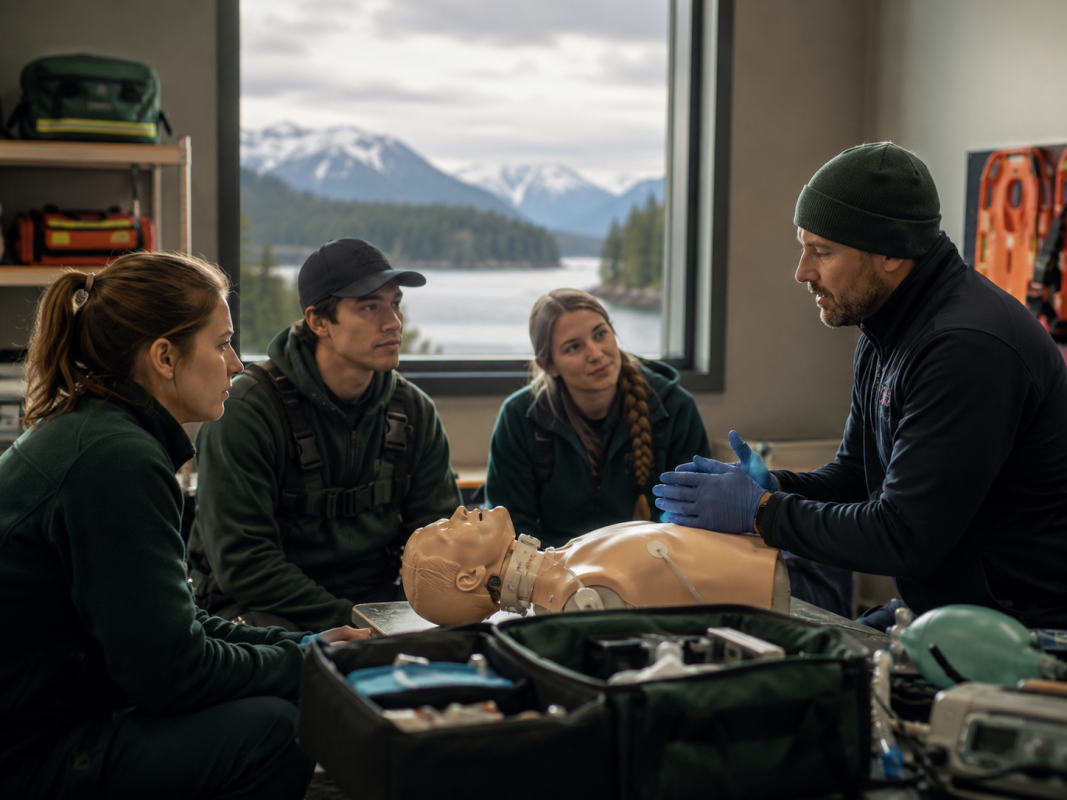
The Alaska ETT program provides foundational training in patient assessment, emergency care, CPR, trauma response, communication, transportation, and scene safety. The course is designed to prepare community responders to provide immediate care until additional medical resources become available..
What will students learn?
ETT training introduces students to essential emergency response skills, including:
- Patient assessment
- CPR and use of an AED
- Airway and breathing emergencies
- Bleeding control and shock
- Medical emergenciesT
- Trauma care
- Scene safety
- Communication and documentation
- Patient movement and transportation
- Working as part of an emergency response team
What is an ETT?
An Emergency Trauma Technician is trained to recognize life-threatening emergencies, provide basic emergency care, and assist with the safe movement and transportation of patients.
ETTs may serve with volunteer fire departments, emergency medical services, clinics, public safety agencies, remote worksites, or other community response teams.
ETTs play an especially important role in communities where advanced medical care or ambulance services may be far away.
Who should take an ETT course?
- Volunteer emergency responders
- Fire department members
- Clinic and healthcare support staff
- Public safety personnel
- Remote or industrial workers
- Community members who want to strengthen local emergency preparedness
Explore ETT training
Whether you are interested in becoming an ETT, renewing your certification, teaching a course, or bringing training to your community, SEREMS can help you find the right resources.
Who should take an ETT course?
In many Alaska communities, emergency responders work with limited personnel, long transportation times, challenging weather, and delayed access to advanced medical care.
ETT training gives local responders the knowledge and confidence to begin care quickly, communicate effectively, and support patients during the critical time before additional help arrives.